
Best Community Management Platforms for Dietitians Running Group Programs

Community management platforms can make or break the success of your group program as a dietitian. When clients feel connected, supported, and seen, they’re far more likely to stay engaged, follow through, and ultimately get better results. That sense of community isn’t just a “nice to have”—it’s a powerful driver of accountability, consistency, and transformation.
But creating that kind of environment doesn’t happen by accident. You need a platform that makes it easy for clients to interact, for you to facilitate conversations, and for your program to scale without becoming overwhelming to manage. The right tools can help you streamline communication, organize content, and build a space your clients actually want to show up in.
In this post, we’ll break down why your platform choice matters more than you think, what features to look for as a dietitian running group programs, and the top community management platforms that nutrition professionals are loving right now.
Why a Strong Community Platform Matters for Dietitians
A well-designed community space does more than just “hold” your group program, it actively enhances it! When clients feel like they’re part of something bigger than themselves, retention and satisfaction naturally go up. They’re not just logging in for information; they’re showing up for connection, accountability, and shared progress. That emotional investment is what keeps people engaged long after the initial motivation fades.
It also creates a natural space for peer support. Instead of everything relying on you, clients can celebrate wins together, navigate challenges, and learn from each other’s experiences. Weekly check-ins, discussion threads, and shared insights turn your program into a dynamic, collaborative environment rather than a one-way delivery of information.
Another big win? Professionalism. A dedicated platform gives your program a true “home base”—separate from the distraction and misinformation that often come with social media. Your clients aren’t getting pulled into random nutrition noise or comparison traps; they’re in a focused, intentional space designed for their growth.
And finally, a strong community doesn’t have to end when the program does. With the right setup, it becomes a long-term asset for your business by keeping alumni connected, nurturing relationships, and opening the door for future offers, advanced programs, or ongoing memberships without starting from scratch every time.
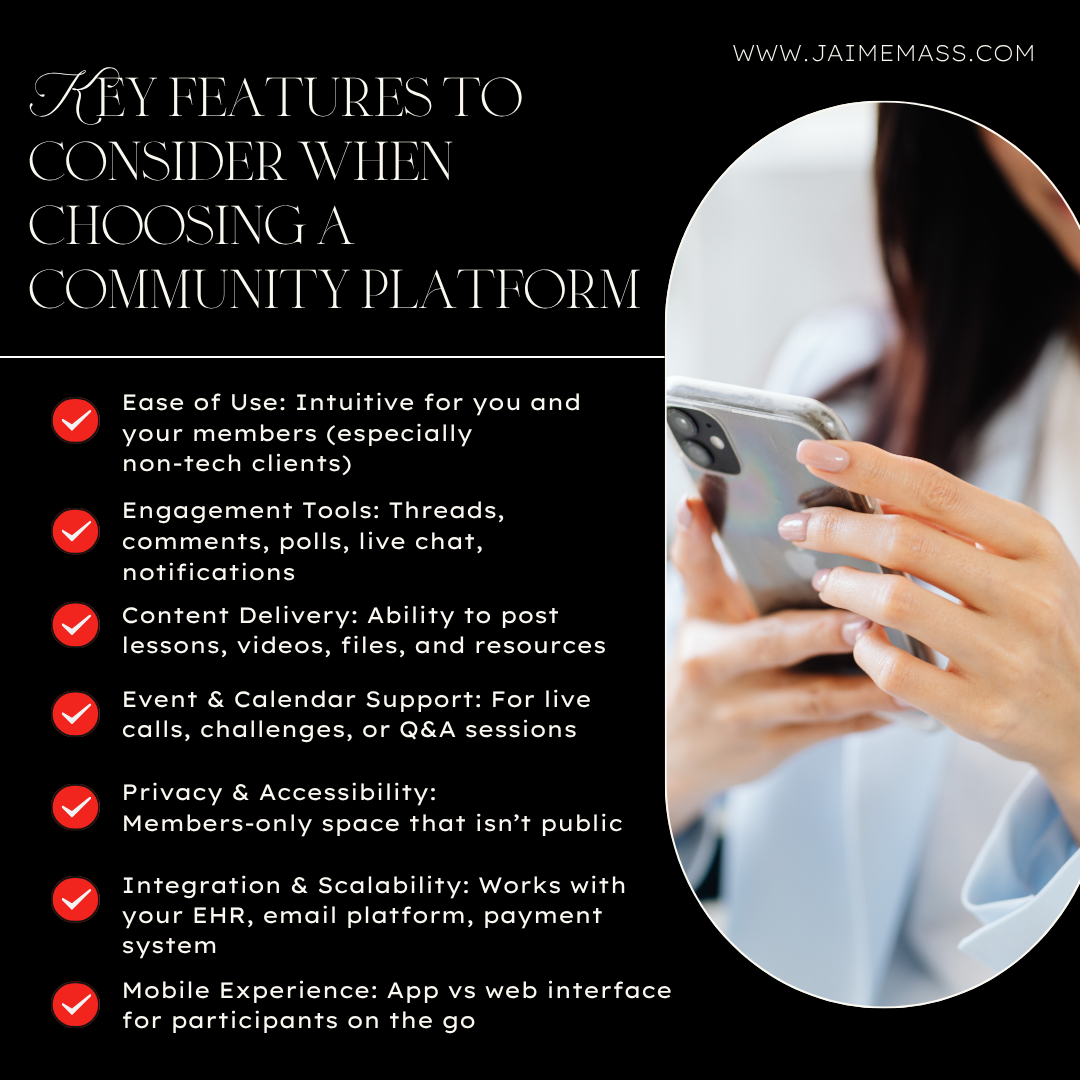
Key Features to Consider When Choosing a Community Platform
Not all community platforms are created equal, and the differences matter more than you think. The right features don’t just make your life easier; they directly impact how engaged your clients feel and how smoothly your program runs behind the scenes. Here are key features to consider:
Ease of Use
If your platform isn’t intuitive, your clients won’t use it—simple as that. Look for something clean, easy to navigate, and low-friction for non-tech-savvy users. The goal is to remove barriers so members can jump straight into participating, not figuring out how the platform works.
Engagement Tools
Strong communities are built on interaction. Features like discussion threads, comments, polls, live chat, and notifications help keep conversations active and consistent. These tools are the backbone of any thriving community, encouraging ongoing participation and habit-building.
Content Delivery
Your platform should double as your program hub. Whether you’re sharing lesson modules, meal plans, recorded trainings, or downloadable resources, you need flexible content options—text, video, files, and more—all in one organized space.
Event & Calendar Support
If you’re running live calls, challenges, or Q&A sessions, built-in event features are a game changer. Look for tools that allow scheduling, reminders, RSVPs, and easy access to replays so clients stay engaged even if they miss something live.
Privacy & Accessibility
A members-only space is key. Unlike public social platforms, a dedicated community platform gives your clients a safe, distraction-free environment where they can share openly without worrying about outside noise or visibility.
Integration & Scalability
As your business grows, your platform should grow with you. Ideally, it integrates with tools you already use—like your EHR (Practice Better, Healthie), email marketing system, and payment processor—so everything runs seamlessly. Bonus points if it allows you to manage multiple cohorts or programs at once without chaos.
Mobile Experience
Your clients are busy, and most will engage on their phones. A strong mobile experience—whether through an app or a mobile-optimized site—makes it easy for them to check in, participate, and stay connected on the go.
At the end of the day, these features aren’t just “nice extras”, they’re what transform your program from a collection of resources into a fully immersive, high-touch client experience.
Top Community Management Platforms for Dietitian Group Programs
There’s no one-size-fits-all platform and the best choice depends on your program style, audience, and how you like to show up as a coach. Here’s a breakdown of the top community management platforms dietitians are using right now, along with where each one shines:
A true community-first platform designed to bring people together. You can create different spaces, organize topics, and host events all in one place. It also has built-in course and group program functionality, making it a strong option for dietitians running cohort-based programs who want both structure and connection.
Known for its clean, modern interface, Circle is ideal if you want a polished, professional feel. It allows for flexible spaces, subgroups, and threaded discussions, which makes organizing content and conversations easy. It’s especially great if you’re combining educational content with an engaged community experience.
If you’re already using Kajabi to host a course or program, this is the most seamless option. Your community integrates directly with your courses, email marketing, and landing pages, creating a cohesive client journey. It works particularly well for higher-ticket programs where a premium, all-in-one experience matters.
Slack is built for communication, which makes it great for real-time interaction. With channels for different topics and quick back-and-forth messaging, it’s ideal for smaller groups or programs focused on daily accountability and support. It has more of a “team” feel than a traditional course platform.
Facebook Groups
Still one of the most familiar and accessible options for many clients. It’s easy to join, requires little onboarding, and works well for free or low-ticket offers. That said, you’re at the mercy of the algorithm, and distractions (plus privacy concerns) can take away from the experience.
A more dynamic, real-time platform with channels, threads, and even voice rooms. It tends to attract a younger audience and has a more casual, fast-paced vibe. If your clients enjoy ongoing conversation and live interaction, Discord can create a highly engaged environment.
Telegram / WhatsApp Groups
Perfect for quick touchpoints—think daily check-ins, reminders, and accountability. These platforms are highly mobile-friendly and easy to use, but they’re not designed for structured content or long-term program organization. Best used as a supplement rather than your main hub.
The takeaway: the “best” platform is the one that aligns with your program delivery, your clients’ preferences, and how you want your community to feel day-to-day.
How to Match the Platform to Your Program Style
Choosing the right platform gets a whole lot easier when you start with how you actually run your programs. Your delivery style, level of support, and client preferences should drive the decision, not just what’s trending.
Cohort-Based Programs
If you’re running structured programs with a clear start and end date, you’ll want a platform that supports both content delivery and community interaction. Mighty Networks, Circle, and Kajabi are all strong options here, giving you the ability to organize lessons, host discussions, and guide clients through a shared experience.
High-Engagement Challenges
For programs centered around daily check-ins, momentum, and quick interactions, real-time communication matters most. Platforms like Slack, Discord, or even Telegram shine in this environment. They make it easy for clients to stay accountable, respond quickly, and feel constantly connected.
Content + Community Hybrid
If your program blends education with ongoing support, look for a platform that does both well. Circle and Kajabi Community are especially effective for this, allowing you to house structured content while still fostering meaningful discussion and engagement alongside it.
Low-Tech or Highly Social Media–Focused Audiences
If your clients aren’t tech-savvy or they’re already spending a lot of time on social platforms, Facebook Groups can be a practical choice. It removes the learning curve and meets clients where they already are, even if it comes with a few limitations on control and focus.
At the end of the day, alignment is everything. The best platform isn’t the one with the most features, it’s the one that fits seamlessly into how you deliver your program and how your clients naturally engage.

Common Mistakes Dietitians Make With Community Platforms
One of the biggest missteps is choosing a platform based on popularity rather than fit. Just because a tool is trending or widely used doesn’t mean it’s right for your clients. If your audience finds it confusing, overwhelming, or inconvenient, they simply won’t engage and even the “best” platform won’t deliver results if no one is using it consistently.
Another common issue is overcomplicating the structure. It’s tempting to create multiple channels, categories, and subgroups to stay organized, but too many options can actually create friction. When clients aren’t sure where to post or what to check first, participation drops. Simplicity almost always wins, clear, focused spaces make it easier for people to show up and contribute.
Lack of clear guidelines is another area where things can quietly fall apart. A strong community doesn’t run on autopilot, you need to set expectations from the start. That includes boundaries around behavior (like a no-bullying policy), as well as communication norms, such as when you’ll be present and responding. Something as simple as letting clients know “I’m in the community Monday through Friday, 9am–5pm” helps build trust and prevents frustration.
Finally, many dietitians take too passive an approach once the community is set up. Posting content and hoping clients engage isn’t enough. Communities thrive when they’re actively facilitated—responding to comments, asking follow-up questions, using emojis, highlighting wins, and keeping conversations going. Your presence sets the tone, and consistent interaction is what turns a quiet group into a vibrant, supportive space.
How to Launch & Grow Your Community Successfully
Launching your community isn’t just about opening the doors, it’s about setting the tone from day one. Start with a clear welcome post that outlines what members can expect, how to use the space, and the guidelines that keep it supportive and productive. When clients know exactly how to engage, they’re far more likely to participate.
Consistency is what keeps a community alive. Scheduling regular prompts, like weekly check-ins, themed discussion days (Motivation Monday, Thursday Wins), or dedicated spaces to share challenges—gives clients an easy entry point to engage without overthinking it. These small touchpoints create rhythm and help participation become a habit.
Live interaction also goes a long way. Hosting consistent calls, Q&As, or group sessions builds trust and deepens connection in a way that written posts alone can’t. Even one standing weekly session can significantly increase engagement and retention.
And don’t forget to pay attention to what’s working. Many platforms offer analytics that show which posts get the most interaction or when members are most active. Use that data to refine your approach so your community continues to evolve alongside your clients’ needs.
FAQs About Community Platforms for Dietitians
Do I need a separate app or is a web-based platform okay?
It depends on your clients. Many platforms offer both, which is ideal. A strong mobile experience is often more important than whether it’s technically an “app.” If your clients are busy and on-the-go, easy mobile access is key.
Can I switch platforms later if my community outgrows it?
Yes, but it’s not always seamless. Migrating content and retraining clients takes effort, so it’s worth choosing a scalable platform from the start. That said, plenty of dietitians do upgrade as their programs grow.
Should I charge separately for community access?
You can, but you don’t have to. Some dietitians include community as part of a higher-ticket offer, while others create standalone memberships. It depends on your business model and how central the community is to your client experience.
How do I moderate discussions without it feeling like a job?
Set boundaries and systems early. Clear guidelines, designated “office hours,” and structured prompts all help reduce the need for constant monitoring. You don’t need to be online 24/7, consistent, intentional presence is what matters most. As your program grows, bringing on a virtual assistant or co-coach can also help lighten the load and keep the community running smoothly without relying solely on you.
Final Thoughts: Choose a Platform That Supports Connection and Growth
At the end of the day, the platform itself isn’t what creates transformation, connection does. The right tool simply enhances that connection by making it easier for your clients to engage, share, and stay accountable.
When choosing your platform, focus less on features and more on behavior: how does your audience naturally like to communicate? Where will they show up consistently? A strong community isn’t just an add-on to your program, it’s an investment in deeper client relationships, better outcomes, and long-term business growth.
If you’re ready to build a more scalable, impactful nutrition business with programs that truly convert, The Rise® is designed to help you do exactly that. I can’t wait to support you!
This post/site contains affiliate link(s). When you click and make a purchase and/or sign up at a site through a link I've provided, I may make a small commission on your purchase at no additional cost to you.