
As athletes continue to look for ways to improve performance, recovery, and long-term health, sports nutrition has become an essential part of training. With growing research showing the impact of proper fueling on athletic outcomes, the demand for qualified sports dietitians continues to rise.
Sports dietitians help athletes optimize nutrition strategies for performance, hydration, recovery, injury prevention, body composition, and overall health. They work with clients across all levels from recreational fitness enthusiasts and youth athletes to collegiate and professional competitors.
If you’re interested in becoming a sports dietitian, it’s important to understand the education requirements, credentialing process, timelines, and legal scope of practice involved. While there isn’t one single path, this guide walks you through the most common and compliant routes into the field. Let’s dive in!
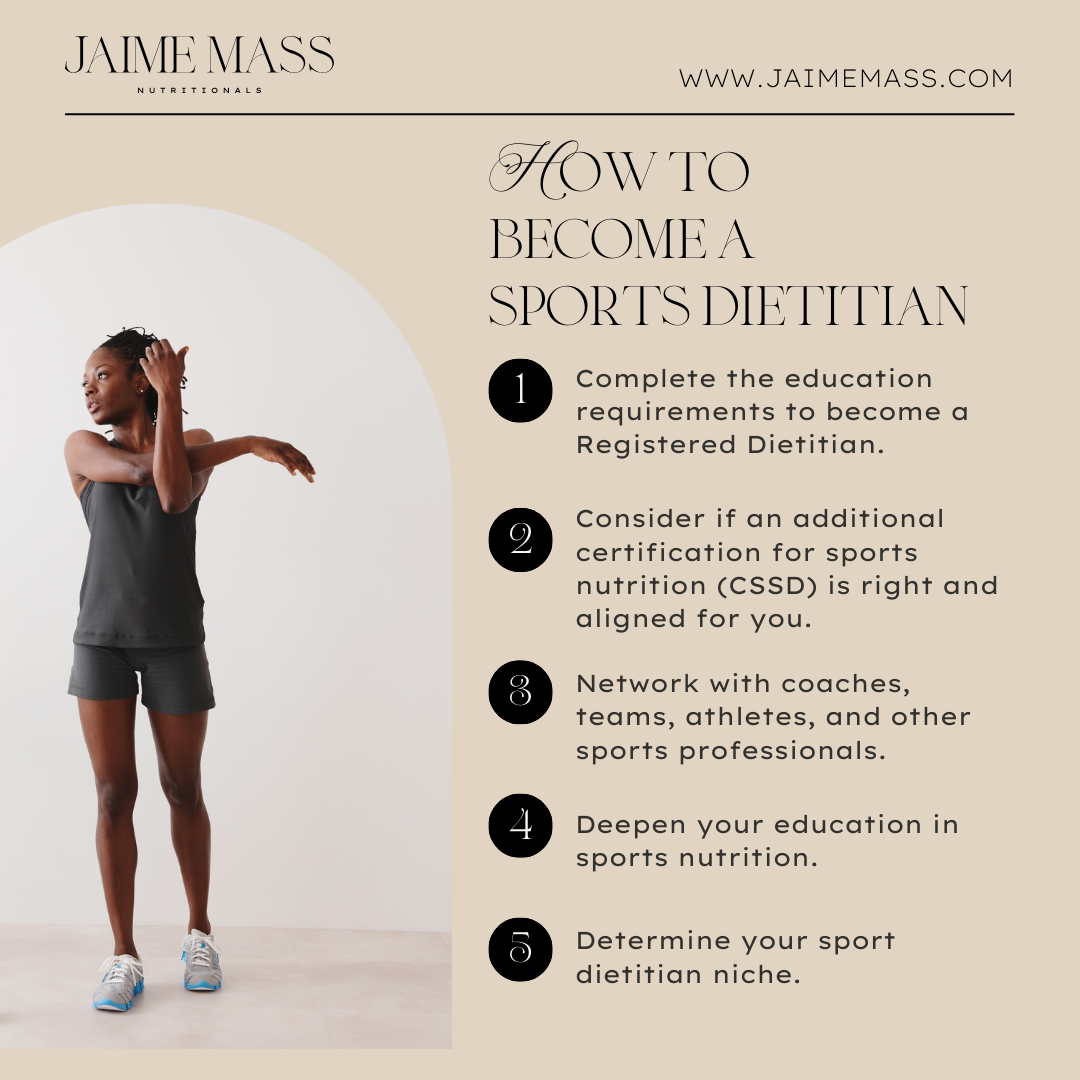
Step 1: Complete the education requirements to become a Registered Dietitian.
In the United States, sports dietitians must first become a Registered Dietitian (RD or RDN) through the Commission on Dietetic Registration (CDR).
The general pathway includes:
Completing a bachelor’s degree (and now a required master’s degree as of 2024) in nutrition or a related field
Completing an ACEND-accredited supervised practice program (dietetic internship or coordinated program)
Passing the national RD exam through the Commission on Dietetic Registration (CDR)
This foundational education allows you to legally provide medical nutrition therapy and individualized nutrition counseling — including sports nutrition.
Step 2: Consider if an additional certification for sports nutrition is right and aligned for you.
Once you have your RD credential secured, you’ll already be fully qualified to work in sports nutrition and begin niching down in your practice. I want to be crystal clear here — you do NOT need additional certifications in sports dietetics in order to pursue sports nutrition in private practice.
With your RD alone, you already have the education and training to support clients across many areas of nutrition, including athletic performance. One of the biggest things that sets you apart as an RD (versus a nutritionist) is your extensive schooling, supervised practice, and credentialing process.
That said, the world of sports dietetics is fairly small, and many RDs feel drawn to continue learning and deepen their expertise through additional credentials. Continuous education is something we naturally value as dietitians — and it can absolutely be a beautiful thing, as long as it doesn’t delay you from pursuing your goals.
You’re allowed to learn and grow while actively helping people. If earning another certification feels aligned for you, go after it — and build your practice alongside it.
Athletes and teams tend to take their health and performance very seriously, which means they deeply value working with qualified professionals like yourself who have strong education and credentials behind them.
Some certifications that may support your pursuits include:
If you choose to pursue the CSSD, it’s helpful to know that this is not something you complete immediately after becoming an RD. The CSSD requires documented sports nutrition practice hours (currently 2,000 hours) before you’re eligible to sit for the exam.
For many dietitians, this takes anywhere from 1–3 years, depending on how quickly they accumulate experience. The great news is that you don’t need to put your life or career on hold to work toward it. Most RDs earn their CSSD while:
Working full-time or part-time in another RD role (clinical, community, private practice, etc.)
Seeing sports nutrition clients on the side
Volunteering or contracting with teams, gyms, or athletic programs
This allows you to build experience gradually, earn income, and grow in the sports nutrition space at the same time. For some, the CSSD becomes a long-term goal that complements their career, while others choose to build a successful sports nutrition practice without ever pursuing it and both paths are completely valid!
Step 3: Network with coaches, teams, athletes, other sports professionals and past connections.
One of the most powerful tools for growth as an RD — especially in private practice — is referrals. When you’re first starting out, you may not yet have testimonials or a long list of sports clients, and that’s completely normal. Every successful dietitian begins there.
The good news is that gaining those first few clients is often easier than you think.
Don’t discount your expansive knowledge, passion, and experience as an RD, even if it comes from another specialty. You already have the tools to help your dreamy sports nutrition clients — and that confidence will show when you connect with coaches, athletic departments, athletes, gyms, and other sports professionals.
In the beginning, many of your first clients may come from friends, past coworkers, or connections from previous jobs or experiences in the sports or fitness world. These early clients are incredibly valuable, not only because you get to support them, but because they often lead to testimonials, referrals, and new opportunities.
Every connection you make matters. Networking can happen in person, online, on social media, through professional groups, and within dietetic communities such as the Academy of Nutrition and Dietetics Dietetic Practice Groups.
Step 4: Deepen your education in sports nutrition
By this point, you may be starting to see your first few sports nutrition clients as a side gig — and if so, congratulations! This is a huge milestone and an essential step in building a career in sports dietetics.
Continue gaining experience and expanding your knowledge by attending conferences, workshops, and webinars. Events like those hosted by sports nutrition organizations (ASPDA) and professional associations can help you stay up to date on research while also connecting you with others in the field.
Be intentional with your time and energy. You don’t need to attend every single event or course available. Instead, focus on opportunities that align with your goals and the areas you most want to grow in. Many of these options are available virtually, live, or as pre-recorded content. You can also look for continuing education opportunities that count toward your RD CEUs.
Even if you’re currently working a 9–5 job that doesn’t fully align with your passion for sports nutrition, nothing is stopping you from learning and growing on your own time. As dietitians, we naturally love expanding our knowledge, and investing in your education keeps you focused on your long-term goals and connected to the work you truly love.
If you already know which area of sports nutrition interests you most, start diving deeper there. If you’re unsure, explore topics such as hydration strategies, supplements, recovery nutrition, macro- and micronutrients, energy balance, nutrition periodization, body composition, and performance nutrition across different sports.
A great resource many sports dietitians love is Nancy Clark’s Sports Nutrition Guidebook. As you continue learning, you’ll likely discover a specific sport, athlete population, or performance focus that truly excites you and that can eventually become your niche.
Step 5: Determine your sport dietitian niche.
You may have already had an idea of the specialty you wanted to work in, but now that you’ve gained some experience and immersed yourself in the world of sports dietetics, you’ll likely have a much clearer sense of which niche suits you best. You might be thinking, “Why would I niche down when I can cast a wide net and get more clients?” In reality, focusing your attention on one area is what helps you stand out. When you specialize, clients begin to see you as a leader and expert in that specific area of sports nutrition. This makes them more likely to trust you, seek you out, and come to you for ongoing support.
By narrowing your focus, you gain influence within that category of sports nutrition and differentiate yourself from other dietitians and nutrition-focused businesses. What you do becomes clear, intentional, and specialized and your dreamy clients won’t have to wonder if you’re the right fit for them. Your niche will make it obvious that you can help them better than anyone else.
Here are some sports dietitian specialties you may consider:
Endurance athletes (marathons, triathlons, cycling, long-distance swimming — you can get even more specific within these)
Strength and power sports (weightlifting, powerlifting, bodybuilding)
Team sports (soccer, basketball, football, rugby — and even specific levels or age groups)
Youth athletes (specific sports and levels of competition)
Tactical athletes (military, police, firefighters)
Recreational athletes and fitness enthusiasts
Special populations in sports (diabetes, celiac disease, vegetarian athletes, etc.)
Traveling athletes (managing fueling across time zones and competitions)
E-sports nutrition for professional gamers
Weight management for sport-specific performance goals
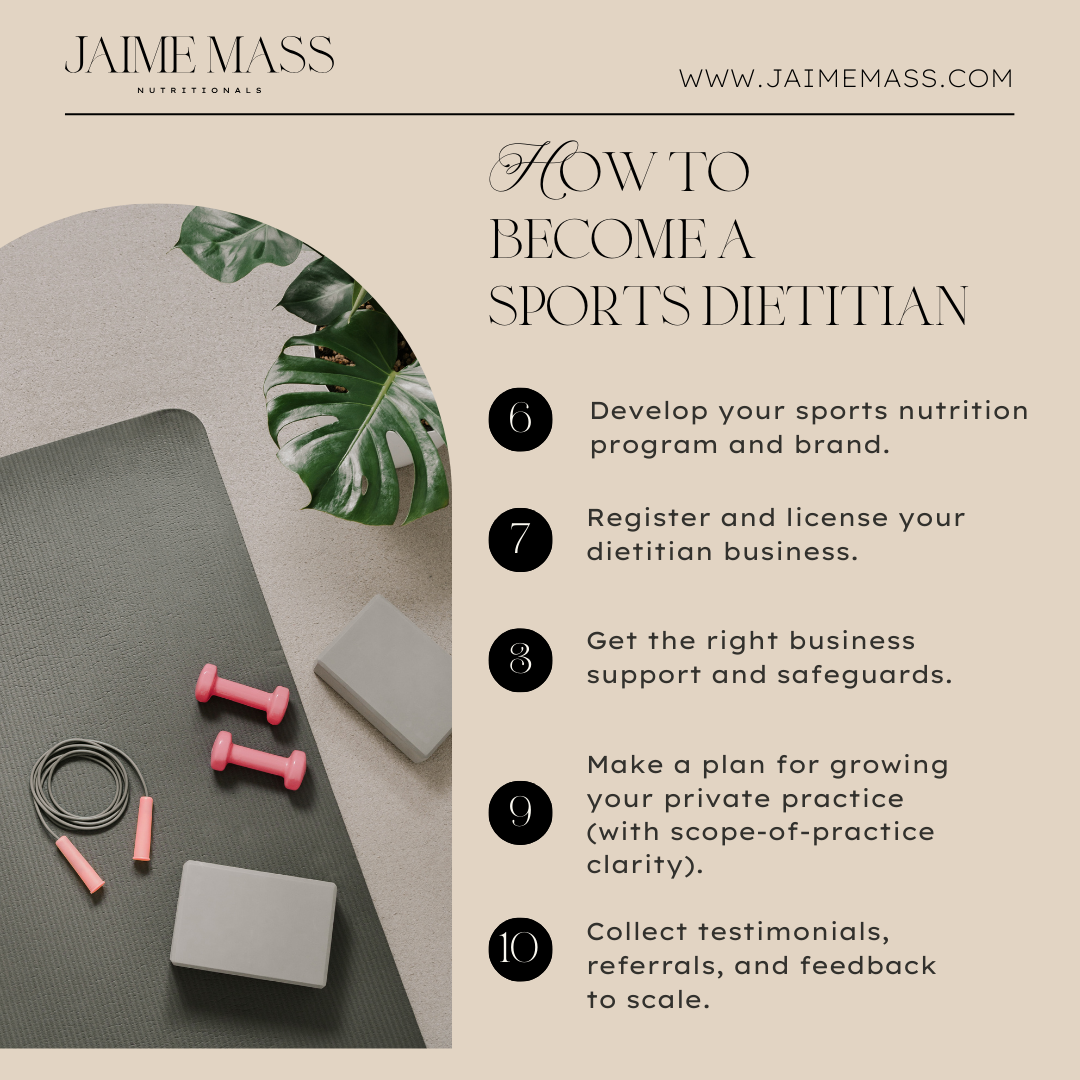
Step 6: Develop your program and brand.
At this point, you have all the tools you need to continue growing your own online nutrition practice. Now it’s time to get creative and bring your passion to life by developing your brand. Your brand is much more than a logo or a catchy business name, it’s the essence of who you are as a professional and what you stand for. Take time to define your values and think about what makes you unique. Consider what you want your clients to experience when they work with you and how you can infuse your personality into everything you do, from your communication style to your approach to sports nutrition.
When building your brand, think about how you can showcase your individuality through your marketing materials and content, especially on social media. Social media is one of the most impactful ways to practice your messaging and connect directly with your audience. It allows potential clients to see your personality, values, and expertise in real time.
As for your program itself, many sports dietitians start with one-on-one coaching, which can be a great way to begin. From there, think intentionally about what you want that coaching experience to look like. What steps will your clients take to reach their goals? How will you guide them through the process? Consider the support you’ll offer, such as regular coaching calls to review progress and challenges, messaging support between sessions, personalized meal plans, fueling guides, recipes, or educational resources.
By thoughtfully structuring your program and client experience, you create a clear and effective path for success. This not only helps your clients achieve real results but also strengthens your brand as a trusted, results-driven sports nutrition professional. Even if everything isn’t fully mapped out yet, casting a vision for the future will help you create actionable steps to turn your dream into reality.
Step 7: Register and license your dietitian business.
You may have already registered your business in order to get started with your private nutrition practice. If not, this is the step where you’ll make your business official. You’ll need to decide on your business entity and register it with your state, along with completing any local or state licensing requirements that apply to dietitians in private practice. This process can look different depending on where you live, so it’s important to research the specific regulations in your area.
While this may not be the most exciting part of building your business, it’s an essential one. Having everything properly registered and compliant gives you peace of mind and sets you up for long-term success. And honestly, there’s something pretty exciting about making your business official! If you’d like guidance through this process, my program, The Foundation®, is designed to walk you through each step!
Step 8: Get the right support and safeguards.
Anytime you’re working in health and wellness, it’s crucial to protect both yourself and your clients by maintaining ethical and appropriate business practices. As an RD, you already understand how important this is — your clients’ well-being always comes first. Setting up the right systems and professional support helps ensure your practice runs smoothly and safely. Some key areas to consider include:
Insurance (professional liability insurance, general liability insurance, etc.)
Legal Support (I recommend Sam Vander Wielen)
CPA/Accounting (I recommend Megan Naaz)
Website Expert (I recommend Jess Creatives)
Having these safeguards in place allows you to focus on what you do best, supporting your clients, while knowing your business is protected!
Step 9: Make a plan for growing your private practice (with scope-of-practice clarity)
Once your practice is set up, the next question becomes: how are you going to grow your business? First, let me say this, you do NOT need to do TikTok dances or post funny nutrition memes to attract clients (unless that genuinely feels fun and aligned for you!). Social media can be a powerful tool, but it’s not the only way to grow a successful sports nutrition business. I recommend starting with just one social media platform that aligns with where your dreamy clients already spend their time. Ask yourself, “Where is my ideal client going to look for nutrition and performance information?” and begin there. When showing up online, lean into your strengths and personality. Let go of perfectionism and focus on sharing in a way that feels ethical, authentic, and true to you.
At the same time, remember that social media is only one piece of the growth puzzle. You can also build your practice through:
Networking with local gyms, sports clubs, and fitness centers
Connecting virtually with fitness and sports organizations in other locations
Offering free sports nutrition resources, workshops, nutrition guides, or PDF downloads
Sharing helpful content through a blog or email list
Encouraging referrals from current and past clients
As you grow, it’s also important to maintain clear scope-of-practice boundaries. Always ensure the services you offer align with your RD credential, state licensure laws, and ethical guidelines. This includes staying evidence-based, avoiding unverified supplement claims, and knowing when to refer clients to other healthcare providers when needed. Having clarity around your scope of practice not only protects you legally, it also builds trust with clients and referral partners!
Step 10: Collect testimonials, referrals, and feedback to scale.
Testimonials and referrals play a huge role in growing your private practice. Not only do they help attract new clients, but they also establish credibility, build brand awareness, and boost your confidence along the way.
Think of testimonials as little reminders of the impact you’re making — they’re incredibly motivating during both the exciting seasons and the challenging ones. In addition to testimonials, regularly collecting feedback from your clients is essential. Hearing what’s working well and where you can improve allows you to refine your programs, enhance the client experience, and continue growing in a way that truly serves your audience.
This combination of social proof and honest feedback will help you scale your sports nutrition practice in a sustainable and impactful way.
FAQ: Common Questions About Becoming a Sports Dietitian
How long does it take to become a sports dietitian?
Most people take around 5–6 years to complete the education and supervised practice required to become a Registered Dietitian. This includes a bachelor’s degree, a master’s degree, and an accredited internship or coordinated program. If you’re already an RD and transitioning into sports nutrition, the timeline is much shorter and often depends on how quickly you build experience, gain continuing education, and establish your niche. Many dietitians begin working with sports clients part-time while maintaining other RD roles.
Do I need a CSSD certification to work as a sports dietitian?
No, the CSSD is not required to practice sports nutrition as an RD. Your RD credential alone qualifies you to work with athletes and provide individualized nutrition counseling. The CSSD is an optional advanced credential that can enhance credibility, especially in collegiate or professional sports settings, but many successful sports dietitians build thriving careers and private practices without it.
How long does it take to earn the CSSD?
The CSSD requires 2,000 hours of documented sports nutrition practice before you’re eligible to sit for the exam. For most RDs, this typically takes about 1–3 years, depending on how quickly those hours are accumulated. Most dietitians work toward the CSSD while working full-time or part-time in other RD roles and seeing sports nutrition clients on the side. This allows you to grow your expertise and income at the same time.
How much do sports dietitians make?
Earnings vary based on setting, experience, and niche. Sports dietitians working at universities, or athletic organizations often earn between $60,000–$90,000+ per year. Those in private practice can earn anywhere from $75,000 to $150,000+ depending on client volume, services offered, and how their business is structured.
Do I need to specialize in one sport or athlete type?
While it’s not required, many sports dietitians find that niching down helps them stand out, build authority, and attract ideal clients more easily. Specializing in a specific population or performance goal often leads to clearer marketing and stronger referrals.
Can I work as a sports dietitian without working with professional athletes?
Absolutely. Many sports dietitians work primarily with recreational athletes, youth athletes, fitness enthusiasts, and amateur competitors. You don’t need to work with elite or professional athletes to build a successful and impactful sports nutrition career.
Final Thoughts: You can have your own private sports nutrition business!
Becoming a sports dietitian is an exciting and rewarding career path that combines science, performance, and passion. While it requires proper education, credentialing, and experience, there is no single “perfect” path. Many dietitians build their careers gradually — transitioning into sports nutrition while working other RD roles, growing part-time practices, and continuing their education along the way.
Whether your goal is to work with teams, athletes in performance settings, or build your own private sports nutrition practice, the key is to start with a strong foundation and take consistent, aligned steps forward.
If you have a passion for sports and nutrition and dream of building your own private online nutrition practice, now is a powerful time to pursue it. Athletes are more invested than ever in performance nutrition, and they’re actively seeking qualified professionals to guide them.
If you’re ready to turn your expertise into a thriving sports nutrition business, The Foundation® was created to help dietitians confidently launch and grow their private practices with clarity, compliance, and strategy. Apply to work with me today and let me help you realize your full potential as a sports dietitian!