

When it comes to how to get nutrition clients, most dietitians assume it’s just about posting more on social media or improving their credentials. But once you start an online nutrition business, you quickly realize that getting a consistent stream of new clients can feel like one of the biggest hurdles to overcome.
And here’s the truth most people won’t say: it’s not just about being a great dietitian. You also need visibility, a clear conversion path, and an offer that actually works. Without those pieces in place, even the most qualified RDs can struggle to turn interest into paying clients.
The good news is that client growth doesn’t have to feel random or unpredictable. Once you figure out how to combine traffic, trust, and transformation, your business starts to feel much more stable—and a lot more like the thriving private practice you envisioned.
In this post, we’re focusing on how to acquire online nutrition clients, while also strengthening the parts of your offer that make people say yes!
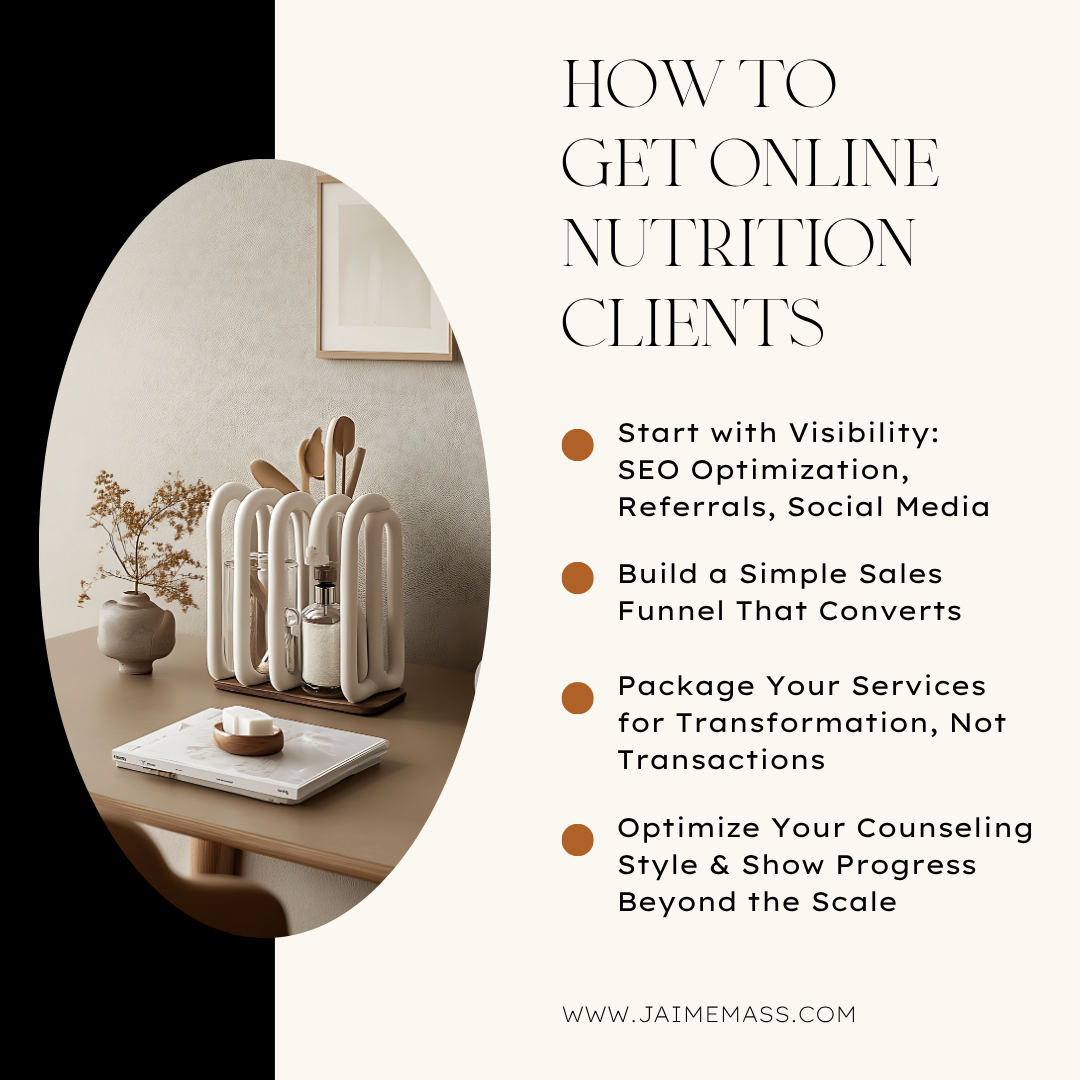
Start with Visibility: You Can’t Get Clients If No One Finds You
Before someone becomes a client, they need to discover you. One of the biggest mistakes dietitians make is relying too heavily on a single platform, usually social media, and expecting it to consistently bring in leads. While social media is important, it’s only one piece of a much bigger puzzle.
Social media works best as a trust-building tool, not just a growth engine. The accounts that convert well tend to share specific client stories, speak directly to one niche problem, and balance education with personality. Generic tips rarely move the needle anymore, people are looking for connection and clear proof that you understand their experience.
In reality, the most stable nutrition businesses pull from multiple traffic sources. Let's explore a few:
SEO Optimization
Search engine optimization (SEO) is one of the most reliable long-term strategies. Writing blog posts that answer specific, high-intent questions—like “how to stop binge eating at night”—can generate leads for months or even years. One dietitian I worked with inside The Foundation® started turning her Instagram recipes into blog posts. After about six months, she was consistently receiving coaching inquiries through her website without needing to post daily on social media. Over time, her traffic even grew enough to generate ad revenue, creating an additional stream of income.
Referrals
Referrals are often the fastest-converting source of new clients, yet they’re widely underutilized. Building relationships with therapists, physicians, and fitness professionals can create a steady stream of warm leads. This doesn’t have to be complicated, it can start with something as simple as meaningful connection. For example, setting up virtual coffee chats with like-minded professionals can naturally lead to collaborations like Instagram Lives, webinars, or guest blog posts, all of which expand your reach and credibility.
Paid Ads
Paid ads can also accelerate growth, but only once your organic strategies are working. When used effectively, they amplify what’s already converting. When used too early, they tend to magnify confusion rather than results.
Build a Simple Funnel That Converts
Getting attention is only the first step. Without a clear path from “interested” to “client,” even strong traffic won’t translate into bookings.
The most effective funnels are usually simple. Someone discovers your content, receives a piece of free value, like a guide, quiz, or training, and then enters a short email sequence that builds trust before being invited to take the next step. This could be booking a consultation or enrolling in a program.
For example, when fellow dietitian Lucy joined The Rise® she created an “8-question IBS quiz” and added it to both her Instagram bio and website. Instead of sending people directly to book a call, she used the quiz as an entry point and nurtured leads through email after they completed it.
As a result, her consultation bookings doubled, largely because potential clients felt more informed and confident before committing. Within just three months, she was fully booked!
Package Your Services for Transformation, Not Transactions
Even with strong marketing, your offer has to make sense. Nutrition change takes time, yet many dietitians still rely heavily on one-off sessions. While those may feel easier to sell, they often don’t produce meaningful results or long-term clients!
Shifting to 3–6 month packages allows you to guide clients through a full transformation. It also gives you the ability to track progress, refine your process, and collect stronger testimonials. Over time, this makes your business more compelling and easier to market.
Remember: clients aren’t just buying sessions, they’re buying outcomes. The clearer you can make that journey, the more likely they are to commit.
Your Counseling Style Directly Impacts Client Growth
It’s easy to think of client acquisition and client results as separate, but they’re deeply connected. The more effectively you help clients change their behaviors, the more referrals, testimonials, and confidence you generate.
Techniques like motivational interviewing, SMART goal setting, and habit tracking aren’t just clinical tools, they’re business growth tools. Dietitians who focus on behavior change rather than just education tend to see higher retention and more word-of-mouth growth.
When clients feel progress, they talk about it. And that becomes one of your strongest marketing channels.
Show Progress Beyond the Scale
Many clients come in focused on weight, but if that’s the only outcome you highlight, you’re limiting your impact and your appeal. Prospective clients are often discouraged by past experiences where the scale didn’t move, so broadening the definition of success can be incredibly powerful.
Highlighting non scale improvements in energy, digestion, lab markers, consistency, and overall relationship with food creates a more relatable and encouraging picture of what’s possible. It also builds trust, especially with clients who are looking for sustainable change rather than quick fixes.
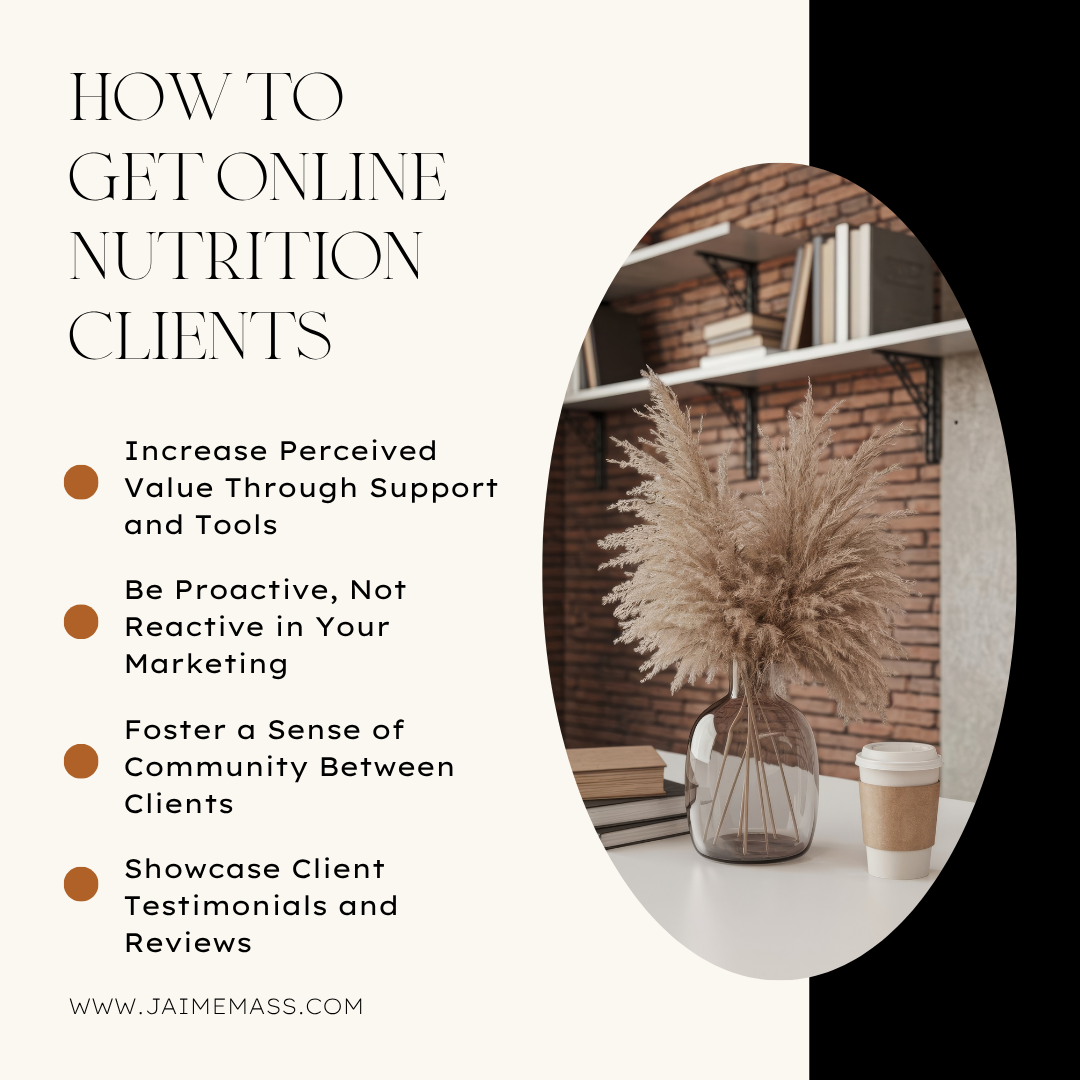
Increase Perceived Value Through Support and Tools
Online clients want to feel supported, not like they’ve purchased a static program. The more touchpoints and structure you provide, the more valuable your offer becomes.
Simple additions like weekly check-ins, messaging support, food journals, and habit trackers can significantly increase both engagement and retention. One dietitian, Claire from The Foundation®, found that adding consistent check-ins and messaging increased her retention rate by over 40%, simply because clients felt more accountable and cared for. These elements don’t just improve the client experience, they make your offer easier to say yes to!
Be Proactive, Not Reactive in Your Marketing
Great dietitians don’t just respond to problems, they anticipate them. Throughout the year, clients will face predictable challenges like holidays, travel, or busy work seasons. When you proactively provide resources to navigate these moments, it positions you as thoughtful, experienced, and one step ahead.
What this looks like in practice will depend on your niche, but the key is aligning your marketing and content with what your ideal client is about to struggle with, not just what they’re currently experiencing.
For example, if you work in gut health or IBS, the weeks leading up to major holidays are the perfect time to share content around “how to manage bloating at holiday meals” or “what to eat when traveling with IBS.” If your niche is sports nutrition, your marketing might shift around pre-season training, competition periods, or recovery strategies during intense training cycles.
Dietitians who focus on disordered eating or intuitive eating often see increased client need in January, when diet culture is at its peak. Instead of reacting to that messaging, you can lead with content like “how to opt out of diet culture this New Year” or “setting non-restrictive goals in January.” Similarly, before summer, you might address body image concerns and help clients navigate the pressure of “summer body” messaging.
When you consistently show up with support before your audience hits these challenges, it builds a deeper level of trust. Potential clients start to see that your program isn’t just reactive it’s designed to support real life, in real time. And that confidence can be the deciding factor that turns someone from a follower into a paying client.
Community Can Be a Hidden Growth Driver
Even in an online setting, people want connection. Creating a sense of community through group spaces, coaching calls, or client challenges can enhance both the client experience and your marketing.
When prospective clients see real people engaging, sharing wins, and supporting each other, it makes your program feel alive and effective. That visibility can often be the final push someone needs to join.
Use Testimonials Strategically
No matter how strong your messaging is, people trust other people more than they trust marketing. Testimonials provide proof that your process works in real life.
The most effective ones are specific and outcome-driven. Instead of general praise, highlight real changes, whether that’s improved eating patterns, reduced anxiety around food, or better health markers. Sharing these across your website, social media, and emails reinforces your credibility at every stage of the client journey.
Final Thoughts: Client Growth Isn’t Random
If getting clients has felt inconsistent, it’s usually not just one issue, it’s a combination of visibility, conversion, and offer clarity.
When you build multiple traffic sources, create a simple funnel, and deliver a program that truly supports client transformation, your business becomes much more predictable. Leads come in more consistently, clients convert with greater confidence, and growth starts to feel sustainable instead of stressful.
Getting clients isn’t about luck, it’s about building a system that works and refining it over time.
If you’re ready to create a more consistent, scalable nutrition business, take the next step. Take this quiz to see if nutrition business coaching is right for you!