
Starting a private practice can feel equal parts exciting and heavy. If you’re an RD thinking about starting a private practice, you’re probably carrying a mix of fear, self-doubt, and low-key decision fatigue, because suddenly every choice feels big and permanent. You may be thinking, “Do I niche down now or later? What if I’m not “ready”? Why does everyone else look so confident online?” (Spoiler: they weren’t always either.)
Here’s the reframe most dietitians don’t hear enough: building a private practice isn’t just about checking boxes or doing all the “right” things—it’s about who you’re becoming in the process. The real shift happens when you move from “What do I need to do?” to “Who do I need to become to lead this business?” Because aligned practices aren’t built by perfect plans; they’re built by RDs who are willing to step into clarity, confidence, and ownership, even before everything feels figured out.
This post is for dietitians who are ready to lead, not just launch. We’re keeping it high-level, mindset-focused, and honest about what it really takes to create a private practice that feels sustainable and you. And if you’re craving the step-by-step logistics after this mindset work, don’t worry—we’ve got you covered with the Dietitian Private Practice Checklist and the Dietitian Business Plan to help you turn aligned intention into real-world action.
Why Starting a Private Practice is a Calling, Not Just a Career
For most dietitians, starting a private practice isn’t just a logical next step on a career ladder. It’s a pull. A quiet (or not-so-quiet) nudge that says there’s more impact you want to make, more ownership you want over your work, and more alignment between who you are and how you serve. Private practice asks you to lead, to decide, and to trust yourself in ways traditional roles often don’t.
If you pause for a second, you can probably remember what drew you here in the first place. It likely wasn’t another credential, title, or resume upgrade. It was the desire to work with people you actually love supporting, instead of feeling stretched across every nutrition concern under the sun. It was wanting your work to feel meaningful again, not rushed or boxed in by systems that weren’t built for the kind of care you value.
At its core, private practice offers alignment, autonomy, and impact. You get to shape your schedule, choose how and where you work, and build a business that fits your life instead of forcing your life to fit your job. More importantly, you get to create deeper change by serving clients in a way that feels intentional and human. That combination is why private practice feels less like a job choice and more like a calling—and why, when it’s built with clarity, it can be incredibly fulfilling.
The Biggest Myth: “I’m Not Ready Yet”
One of the most common thoughts that keeps dietitians stuck is the belief that readiness comes from checking every box first. Another certification. A perfectly polished website. A clearer niche. A bigger Instagram following. It sounds responsible, but in reality, it often becomes a moving finish line that keeps you in preparation mode instead of practice ownership.
The truth is, “being more prepared” can feel like a safety net, but it’s often just fear wearing a productivity costume. You don’t actually gain confidence by waiting until everything is flawless. You gain it by doing, adjusting, and learning through trial, error, and very normal mistakes. No one launches a private practice with everything figured out, even if it looks that way from the outside.
Readiness in entrepreneurship isn’t a feeling, it’s a skill you build by taking imperfect action. You learn how to have better client sessions by having the early awkward ones. You refine your offers by putting them out into the world and listening to what real clients need. Momentum comes from movement, not perfection. The dietitians who succeed aren’t the ones who waited the longest, they’re the ones who were willing to start before they felt ready and grow from there.
What Actually Fuels a Sustainable Private Practice
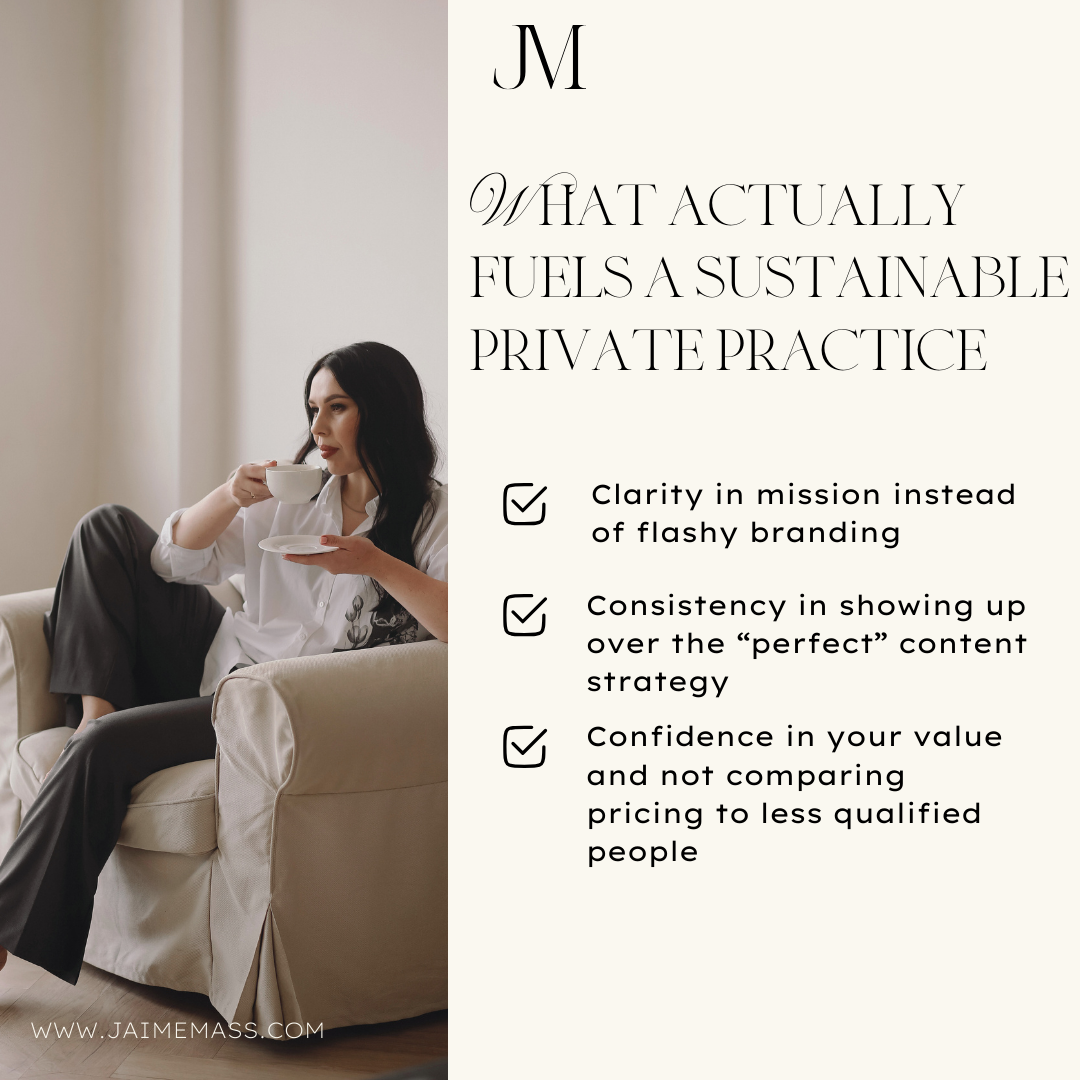
A sustainable private practice isn’t built on flashy branding or perfectly curated feeds, even though social media might make it look that way. It starts with clarity in your mission. Knowing your why matters more than having the trendiest website. Are you passionate about helping women heal their relationship with food after years of disordered eating? Supporting busy moms who want to feel confident in their jeans again? Working with high-performing, stressed professionals to calm GI issues and reclaim their energy? When your mission is clear, decisions get easier and your work feels more meaningful.
Consistency will take you further than any “perfect” content strategy ever could. Showing up regularly, even when your posts feel average or your words don’t land exactly how you imagined, is how you learn what resonates. You’ll discover what performs well by doing, not by spending weeks polishing one post and never hitting publish. Progress comes from repetition, feedback, and staying visible, not from waiting for perfection.
Confidence in your value is another non-negotiable foundation. Constantly comparing your pricing to others, especially less qualified professionals, erodes trust in your own offer. A sustainable practice requires standing strong in what you provide, pricing with intention, and resisting the urge to discount just to feel chosen. When you believe in the transformation you offer, clients feel that certainty too.
Before focusing on external structures like systems, email funnels, or EHR platforms, it’s worth looking inward. Your mindset is the infrastructure of your business. A strong internal foundation supports every strategy you layer on top, and without it, even the best plans can feel heavy or misaligned.
Where Most Dietitians Get Stuck (And How to Break Free)
A huge place dietitians get stuck is waiting for validation or permission. Approval from peers. A mentor telling you you’re ready. Social media engagement confirming you’re on the right track. The problem is that confidence can’t be outsourced. If you wait for external reassurance before moving forward, you’ll always find a reason to pause. Leadership in private practice means trusting your own decisions, even when not everyone understands them yet.
Another common trap is overconsuming content instead of creating and connecting. Podcasts, courses, posts, free trainings, and downloads can feel productive, but at some point, learning becomes a substitute for action. Businesses grow through conversations, relationships, and showing up consistently, not by saving one more Instagram carousel or watching one more webinar.
Many dietitians also stall by constantly pivoting instead of committing. It’s tempting to want to do all the things and serve everyone, especially when you’re multi-passionate. But depth beats breadth in the early stages. Starting with deep 1:1 coaching allows you to truly understand your ideal client, their pain points, objections, and lived experiences. From there, scaling becomes clearer and more sustainable because it’s built on real insight, not guesses.
How to Begin From a Place of Power, Not Panic
The most grounded way to start a private practice is by setting an intentional vision before you rush into action. Ask yourself what kind of life you’re actually building alongside this business. Do you want flexible days, fewer but deeper client relationships, or work that leaves you energized instead of depleted? A strong RD mission might sound like helping women heal their relationship with food so they can live fully and confidently, or supporting high-achieving professionals in reducing gut symptoms so they can show up better at work and home. When your vision is clear, decisions feel less reactive and more purposeful.
Staying anchored in your why is essential, especially when fear or doubt inevitably creep in. There will be moments when you question your pricing, your niche, or whether anyone will say yes. That’s when returning to your mission matters most. Your why is what steadies you when things feel uncertain and reminds you that this work is bigger than a single post, client, or launch.
Embracing experimentation is another way to lead from power instead of panic. You don’t have to get everything right immediately to be on the right path. Notice what types of content you actually enjoy creating and which feel forced. Pay attention to the client work that lights you up versus what quietly drains you. These clues help shape a practice that feels sustainable and aligned, rather than one built on what you think you should be doing.
From there, focus on aligned, courageous action. That might look like pitching yourself for opportunities, posting even when your voice shakes, or serving your very first client with presence and care. Momentum comes from movement. Each step taken with intention builds confidence, clarity, and a business rooted in leadership rather than fear.
What Starting a Private Practice Looks Like When You’re in Flow
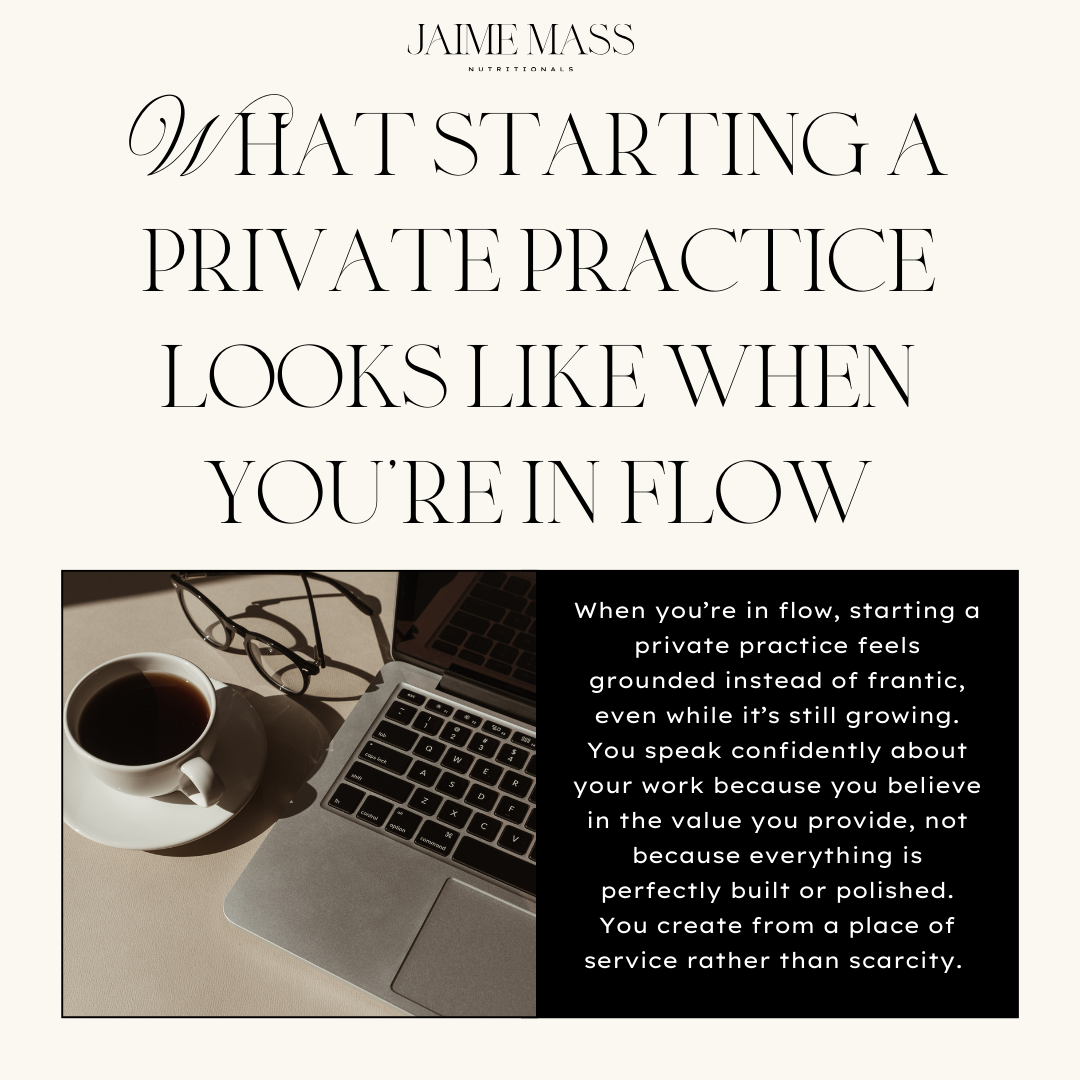
When you’re in flow, starting a private practice feels grounded instead of frantic, even while it’s still growing. You speak confidently about your work because you believe in the value you provide, not because everything is perfectly built or polished.
You create from a place of service rather than scarcity. Marketing and content come from a desire to help and connect, not from pressure or fear of falling behind. That energy shift makes your message clearer and more impactful.
Aligned clients find you through authenticity, not algorithms. By showing up as yourself and sharing what truly matters to you, you attract people who resonate with your approach and values.
Most importantly, you trust that your skills and energy are enough to begin. You stop waiting for permission and start moving forward with confidence, knowing flow comes from action, not perfection.
FAQs About Starting a Private Practice as a Dietitian
What if I don’t know my niche yet—can I still start?
Absolutely. The best way to discover what lights you up is by working with clients. Each session teaches you more about who you love serving and the problems you enjoy solving, and your niche naturally emerges from that experience.
How do I know if private practice is right for me long-term?
You don’t need to have all the answers upfront. Many dietitians start part-time or alongside another job to test the waters. You can explore what feels sustainable while keeping a safety net in place.
Do I have to be super extroverted or tech-savvy to market myself?
Not at all. You’ve already learned complex concepts (like the Krebs cycle!), you can learn new business systems too. Marketing can be shaped around your strengths: maybe you love writing blogs, maybe short videos feel easier. Highlight your superpowers and use tools that work for you, not the other way around.
What if I fail—how do I come back from that?
Failure isn’t the end, it’s part of the process. Expect missteps and reframe them as opportunities to learn. Each “failure” gives insight, builds resilience, and gets you closer to the practice you’re meant to run.
Final Thoughts: You’re Not Starting Over—You’re Rising Up
Starting a private practice is a brave, bold move, and it deserves to be celebrated!!! It’s not about starting from scratch; it’s about stepping into your expertise, your mission, and the impact only you can make.
Clarity doesn’t come from waiting or overthinking. It comes from action. This means showing up, serving your first clients, experimenting, and learning along the way. Each small step builds confidence, momentum, and a business that feels aligned rather than overwhelming.
When you’re ready to dive into the next steps, check out the Dietitian Private Practice Checklist and the Dietitian Business Plan blog posts to turn your vision into a concrete plan.
For RDs who want further guidance and support while building their dream business, The Foundation® is my starter program designed to help you create a practice that fits your life, your values, and your goals. It’s where mindset meets strategy so you can rise into your role as a leader, not just a practitioner.